When you’re serious about adding size and strength, the right tricep workouts can make all the difference. You can spend hours cranking out pushdowns with the wrong bar or a too-light dumbbell and wonder if your arms will ever fill out a T-shirt. The problem often isn’t your effort. It’s the gear. This guide cuts through marketing hype to show you the equipment that actually earns its place in your training space, whether that’s a garage, a shared apartment corner, or a fully kitted gym.
Quick Answer: The best equipment for tricep workouts includes adjustable dumbbells, an EZ curl bar, a cable machine (or a high-quality resistance band alternative), and a sturdy bench. Together they give you the angles and resistance options to hit all three tricep heads and support progressive overload for months.
Why Equipment Choice Directs Your Tricep Workout Results
Walk into most gyms and you will see a half dozen ways to train triceps. Cables, dumbbells, fixed bars, bands, and bodyweight setups all compete for attention. The tool you grab changes which part of the muscle takes the most load, how stable the movement feels, and how easy it is to add weight over time. A solid pair of fixed dumbbells lets you skull crush without wrist strain. A cable stack with a rope attachment keeps tension constant through the full range of motion, something free weights cannot do. The reason this matters is simple. Your triceps make up roughly two-thirds of your upper arm mass, and failing to challenge them with the right equipment leaves that mass largely untapped.
Gear also affects safety and joint health. Elbow discomfort is common when people jump into heavy overhead extensions with a poorly balanced bar or a cheap band that snaps unevenly. Well-designed equipment with ergonomic grip angles and smooth resistance curves reduces those risks. It also makes it easier to train close to failure without losing form.
Pro Tip: Even if you have a full cable setup at your disposal, keep a pair of medium-weight dumbbells on hand. They force your stabilizers to work harder during skull crushers and overhead presses, building a more complete look than cables alone.
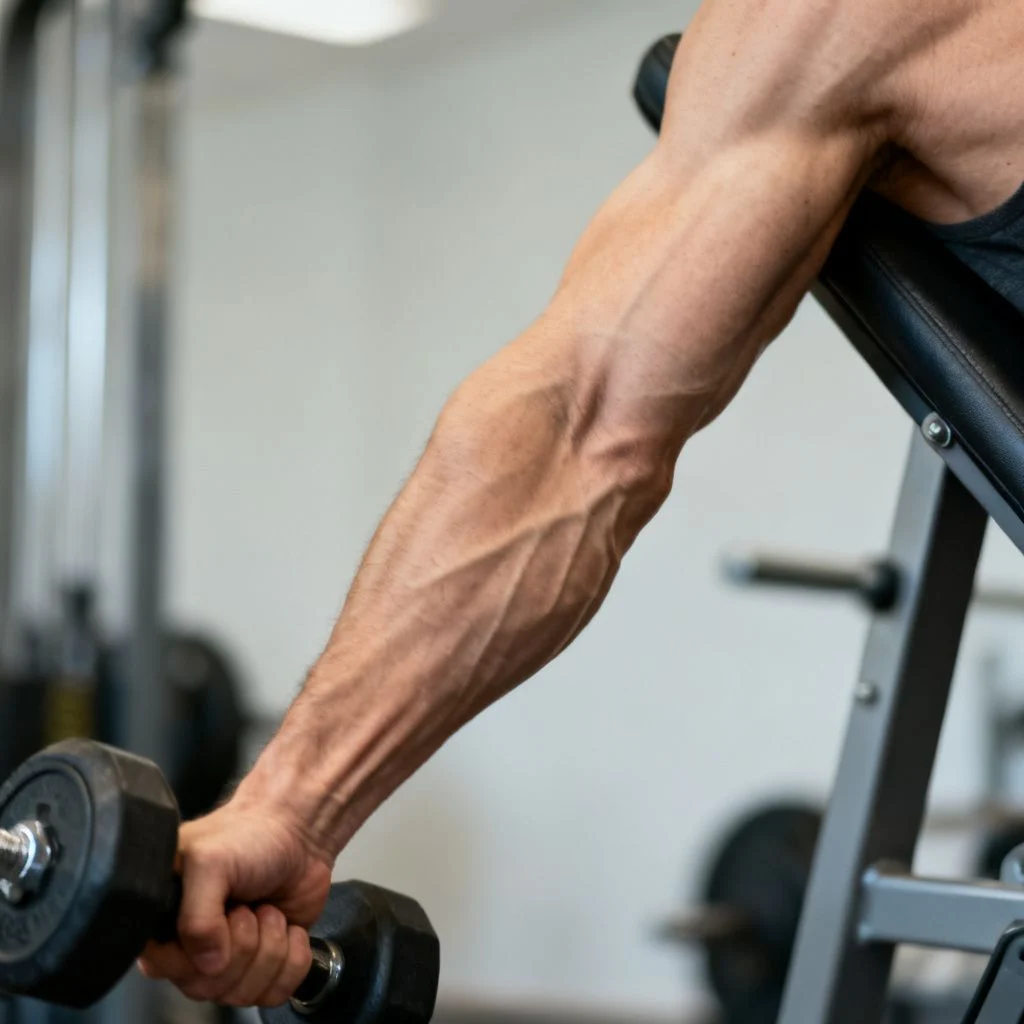
Tricep Anatomy 101: Matching Gear to Each Head
Most lifters know the triceps has three heads but rarely think about how equipment selection biases one over the other. Understanding that link helps you pick tools that fix weak points instead of just repeating the same stimulus.
- Long head: Runs along the back of the arm, gets fully stretched when your elbow is overhead. Overhead cable extensions with a rope or an EZ bar and lying tricep extensions with dumbbells both hammer this head. Bands anchored high also work well here.
- Lateral head: Gives the triceps that horseshoe shape from the side. Pushdowns with a straight bar or V-bar attachment, plus close-grip bench pressing with a barbell or dumbbells, light it up. A cable stack lets you adjust the pulley height to fine-tune the angle.
- Medial head: Sits deep and aids elbow stability. Often activated during reverse-grip pushdowns or any movement where the palm faces up. A simple straight bar and low pulley take care of this nicely.
Mixing equipment based on this anatomy prevents overuse injuries and makes sure you aren’t ignoring a head that could add noticeable thickness. A gym with only dumbbells can still hit all three if you get creative with bench angles and tempo, but a combination of free weights and cables usually wins for completeness.
Pro Tip: If your gym has a dual adjustable pulley system, set one side to a low position for a reverse-grip pushdown and the other high for a standard rope pushdown. Alternating sets back to back gives you a killer pump and hits the medial and lateral heads with minimal rest.
Key Features to Evaluate in Tricep Workout Equipment
Before you buy anything, scan for a few non-negotiable traits. Price tags do not always line up with performance, and some budget-friendly pieces outlast fancier options.
- Grip comfort and texture: Knurling on dumbbell handles and EZ bars should feel secure without shredding your palms. Rubber-coated grips on bands often slip when sweat builds up. Look for textured metal or firm neoprene.
- Adjustability: Fixed-weight dumbbells take up a lot of space. A pair of quick-adjust dumbbells, like the PowerBlock Elite or Bowflex SelectTech models, packs multiple weight options into a small footprint and lets you jump 5 pounds instead of hunting for a heavier set.
- Attachment compatibility: Cable machines mean nothing without good attachments. Check that the carabiner or clip on your rope, V-bar, or straight bar fits standard gym cables and home pulley systems. Some budget attachments use thinner carabiners that rattle and fail under load.
- Durability under repeated force: Tricep exercises like skull crushers and heavy pushdowns subject equipment to constant tension. Chrome-plated bars chip. Thin-walled tubing bends. Look for solid steel construction and reinforced stitching on nylon ropes.
- Range of motion support: A narrow bench forces your elbows into awkward angles during dumbbell extensions. A flat utility bench with a wider pad and firm foam lets you control the descent better.
Evaluating these features before clicking “buy” prevents the frustration of gear that wobbles, slips, or wears out in six months. Spend a little extra on the items you use most days and save on accessories you will only grab occasionally.
Pro Tip: If you mostly train with bands, pay extra attention to the anchor system. A door anchor that slips mid-set can turn a productive tricep workout into a wall repair project. The Tubing Anchor from Rogue or a sturdy over-the-door strap with a metal D-ring both hold up well.
Comparing the Top Equipment Types for Tricep Workouts
The table below stacks the four most common equipment categories head to head. Use it to decide what fits your budget and space, then fill in the gaps later as your needs change.
| Equipment Type | Best For | Typical Price Range | Key Advantage | Recommended Example |
|---|---|---|---|---|
| Adjustable Dumbbells | Overhead extensions, skull crushers, kickbacks, close-grip press | $150–$450 | Compact, versatile, great for unilateral work | PowerBlock Elite EXP |
| EZ Curl Bar | Skull crushers, lying extensions, close-grip presses | $40–$120 | Wrist-friendly angle, works with standard or Olympic plates | Rogue Curl Bar |
| Cable Machine + Attachments | Pushdowns, overhead extensions, reverse-grip work | $200–$2,000+ (machine) + $20–$80 per attachment | Constant tension, quick exercise switches | REP Fitness FT-5000 (functional trainer) or Spud Inc. Pulley System for home |
| Resistance Bands | Band pushdowns, overhead extensions, banded kickbacks | $15–$60 per set | Ultra-portable, take them anywhere, easy on joints | Undersun Fitness Band Set |
Dumbbells and an EZ bar handle the bulk of free-weight tricep work. A cable setup, even a compact pulley system you attach to a rack, opens up isolation moves that are hard to replicate otherwise. Bands serve as a portable backup or a way to add accommodating resistance to free-weight lifts.
Pro Tip: Consider a resistance band set even if you own a cable machine. Loop a band around the base of a sturdy post and you can train triceps in a hotel room without missing a session.
Building a Tricep Workout Routine Around Your Equipment
Having the gear is step one. Pairing it into a sequence that respects fatigue, exercise order, and progressive overload turns it into size. Start with a compound movement that also hits triceps, like a close-grip bench press or a weighted dip, then move to extension-based work where the triceps are the primary mover.
A sample dumbbell-only routine could look like this:
- Close-grip dumbbell floor press: 3 x 6-8 reps
- Single-arm overhead dumbbell extension: 3 x 10-12 per arm
- Incline dumbbell skull crusher: 3 x 10-12
- Bent-over dumbbell kickback (slow eccentric): 2 x 15
If you have a cable setup, swap the kickbacks for rope pushdowns and add a reverse-grip straight bar pushdown to torch the medial head. The sequence matters. Placing heavy pressing first exploits fresh stabilizers. Ending with high-rep isolation pumps blood into the muscle and reinforces the mind-muscle connection.
Progressive overload does not always mean adding plates. You can progress tricep workouts by controlling the eccentric more slowly, reducing rest between sets, or adding a band to dumbbell extensions. The equipment you own should support those variations. If a pair of fixed dumbbells only jumps 10 pounds at a time, it becomes hard to micro-load. Adjustable dumbbells with 2.5-pound increments, or even magnetic fractional plates, solve that.
Pro Tip: Film a set of overhead extensions from the side every few weeks. You will spot form breakdowns like elbows flaring out or a shortened range of motion that hold back tricep development more than your equipment ever will.
Budget vs. Premium: Where to Spend and Where to Save on Tricep Workout Gear
Not every piece deserves a three-digit price. The smart way to outfit a home gym or upgrade a commercial membership is to allocate dollars where they directly affect muscle stimulus and joint safety.
Spend on:
- A quality adjustable dumbbell set you will use for years
- A well-balanced EZ curl bar with aggressive knurling
- A sturdy flat bench that does not slide or wobble
Save on:
- Cable attachments. A simple nylon rope with rubber ends costs under $25 and works just as well as a branded version
- Resistance band sets. Mid-range offerings from Undersun or WODFitters deliver the same linear resistance as premium brands
- Wrist wraps and straps. Generic cotton or elastic wraps at $10 do the job
This tiered approach lets you put serious money into the core items that handle heavy loads and high reps, while cutting costs on accessories that wear out or get replaced every couple of years anyway. A $30 V-bar attachment from a no-name brand will last surprisingly long if the welds are clean and the knurling is present. Before buying, check user reviews for photos of the attachment under real use, not just product listing shots.
Pro Tip: If you are torn between a financial stretch and a compromise, buy the pricier bench and dumbbell set. You can do meaningful tricep workouts with bodyweight and a band while you save for a cable tower later.
Overlooked Accessories That Upgrade Tricep Workouts
Beyond the main equipment, a few inexpensive add-ons solve common problems and unlock new angles.
- Fat Gripz or thick bar adapters: Sliding these onto a dumbbell or EZ bar handle forces more forearm recruitment and reduces elbow strain by spreading pressure. They also make moderate weights feel heavier, extending the useful life of lighter dumbbells.
- Elbow sleeves: For lifters who get achy joints from heavy skull crushers, a 7mm neoprene sleeve like SBD or Gymreapers keeps the area warm and provides mild compression.
- Dip belt: Once bodyweight dips become easy, a chain belt lets you add plates for progressive overload. The triceps get hammered during dips, especially when you stay upright and limit chest lean.
- Landmine attachment: Set up a barbell in a landmine and you can perform standing tricep presses with an EZ bar collar. The arc path reduces shoulder strain.
These items rarely top “must-buy” lists, but they solve very specific limitations. A dip belt costs around $25 and turns parallel bar dips from a high-rep pump move into a legitimate mass builder.
Pro Tip: Try a landmine tricep press as a finisher after heavy pressing. Load the bar with a 25-pound plate, grip the end of an EZ bar with both hands, and press forward. The constant tension at lockout gives a unique squeeze cables cannot match.
Key Takeaways
- Dumbbells, an EZ bar, and a cable setup form the essential gear trio for complete tricep workouts that target all three heads.
- Prioritize grip quality, adjustability, and durability when shopping. A stable bench and incremental weight jumps matter more than a brand name.
- Match equipment to the specific head you want to emphasize: overhead tools for the long head, pushdown angles for lateral and medial.
- Start tricep workouts with a compound press and finish with isolation moves using the available gear for better sequencing and fatigue management.
- Spend on core items like dumbbells and a bench. Save on cables attachments and bands, which deliver similar performance at lower price points.
Frequently Asked Questions About Tricep Workouts and Equipment
Q: Can I build big triceps with just dumbbells and no cable machine?
A: Yes. Dumbbell skull crushers, overhead extensions, and close-grip presses provide enough resistance and stretch to build significant mass. You will miss the constant cable tension, but adjusting tempo and adding bands can mimic that effect fairly well.
Q: What is the single most versatile piece of equipment for tricep workouts at home?
A: A pair of adjustable dumbbells paired with a flat bench. That combo handles overhead work, lying extensions, kickbacks, and close-grip pressing. It packs the widest exercise variety into a small footprint.
Q: Are resistance bands effective for serious tricep growth or just for light pump work?
A: Bands can support real growth if you use them with high tension and slow eccentrics. However, progressive overload becomes harder to measure once you stretch beyond a certain point. Combining bands with dumbbells for accommodating resistance often bridges that gap.
Q: How often should I train triceps with this equipment?
A: For most people, training triceps directly twice per week allows enough stimulus and recovery. If you also bench press or overhead press heavily, you are already hitting them indirectly, so two focused sessions is plenty.
Q: Do I need a dedicated curl bar, or can I use a straight barbell for lying tricep extensions?
A: An EZ curl bar reduces wrist and elbow torque during exercises like skull crushers. A straight bar can work, but many lifters find it aggravates joints after weeks of heavy loading. The angled grip on an EZ bar is worth the small investment.
Q: What cable attachment gives the best tricep isolation?
A: A rope attachment allows a neutral grip and a slight outward flare at the bottom of pushdowns, which hits the lateral head harder and feels more natural for most people. A V-bar or straight bar is better for loading heavier weight and targeting the medial head.
Q: Can I use the same gear for tricep workouts if I have elbow pain?
A: Yes, but select lower-impact variations. Bands, high-rep cable pushdowns with controlled tempo, and dumbbell kickbacks typically stress the elbow joint less than heavy skull crushers or close-grip presses. An elbow sleeve often helps too.
Q: Is a functional trainer worth the price just for tricep workouts?
A: A full functional trainer is a significant expense and overkill if you only use it for triceps. A compact pulley system like the Spud Inc. cable setup, anchoring to a rack or beam, costs under $100 and delivers the same isolation benefits.
References & Further Reading
- American Council on Exercise. “ACE Study Reveals Best Triceps Exercises.” https://www.acefitness.org/education-and-resources/professional/expert-articles/2852/ace-study-reveals-best-triceps-exercises/
- Schoenfeld, B.J. “The Mechanisms of Muscle Hypertrophy and Their Application to Resistance Training.” Journal of Strength and Conditioning Research, 2010.
- Garage Gym Reviews. “Best Adjustable Dumbbells of 2025.” https://www.garagegymreviews.com/best-adjustable-dumbbells
- Poliquin, C. “Arm Training: The Poliquin Principles.” (book), covers exercise angles and tricep head focus.
- Rogue Fitness. EZ Curl Bar product specifications and user reviews. https://www.roguefitness.com/rogue-curl-bar
About This Article
This equipment guide draws on years of hands-on coaching and personal trial across commercial gyms, garage setups, and minimalist apartment corners. The recommendations focus on tools that hold up under real training cycles, not just first impressions. If you have a specific budget or space constraint, the principles here will help you filter the noise and pick gear that fuels consistent tricep workouts for years.